
Origins: Where Suffering Comes From (2) — Fear, Dread, Unease
Shadow exists only because there is light. Light and dark are neither good nor bad — fear, dread, and unease are consciousness's most primal response to "non-existence."
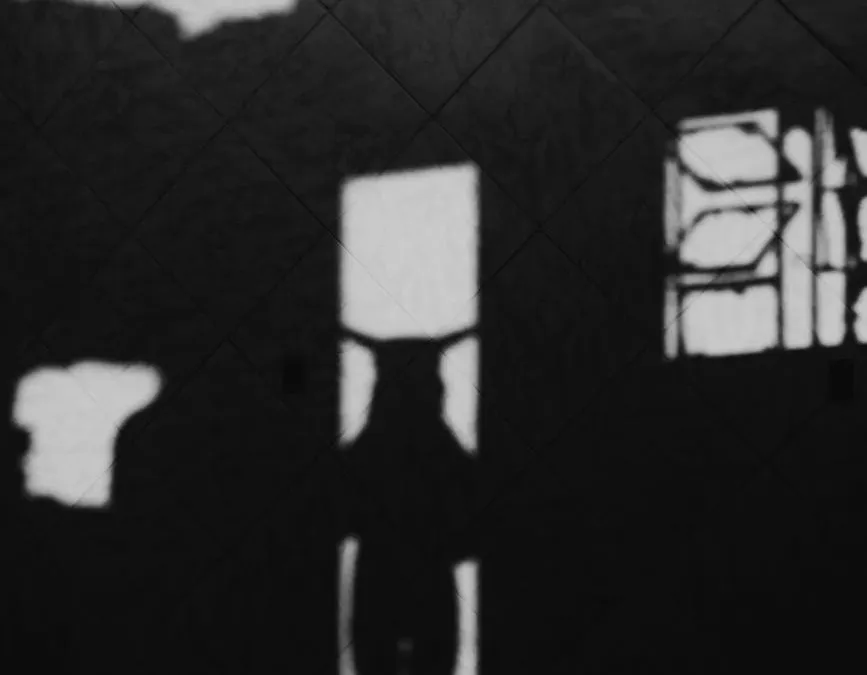
Shadow exists only because there is light. Non-existence does not mean "death."
The previous essay, Where Suffering Comes From (1) — The Body, explained broadly how mind/consciousness becomes the energy that condenses the material world, why body, mind, and spirit are so deeply bound to one another — and introduced the original consciousness.
This original consciousness was the first "light," the first current of "energy." Its arising divided light from shadow: wherever the field of consciousness could reach became "light," and everything beyond its range remained in the original state of chaos — the "dark," the "shadow."
The original consciousness arose from a single thought — "I want…" — and in the formless chaos, it was like a shining sphere of light. Wherever its energy reached, chaos slowly began to take form (because form requires energy to cohere), and a boundary appeared between where there was light and where there was none. The places the energy of consciousness could not touch, by contrast with the "light," became "darkness," "shadow" — something older than consciousness itself.
It — the darkness — represents the state before existence: "non-existence." It represents what lies outside the world of form: chaos.
To "consciousness," the state of non-existence, of chaos, is dissolution — you could say, death. So the dark and the shadow stand, for any conscious mind, as the image of a primal fear. We are always sticking negative labels on them.
In truth, light and dark are neither good nor bad. By natural law, the arising of light produces its contrasting dark. That is simply how nature works — but chaos does not mean bad, and non-existence does not mean evil. In the Maha-Parinibbāna Sutta (DN 16), the Buddha describes the eight liberations — the formless attainments — and the final three are precisely about reaching complete "self-dissolution," entering the state of total "non-existence." But letting go of the fear of non-existence runs against the very instinct of a being composed of consciousness. This is also why "stilling the mind" — thinking of nothing at all — is so difficult for most adults.
From the standpoint of natural selection, asking an organism not to anticipate possible threats, not to keep strategizing its struggle with the world outside — that is a demand that violates the survival principle of any living thing.